
How we deliver this today.
Blockchain engagements at Webist begin with architecture: chain selection, custody model, compliance obligations and the security boundary are settled before any contract is written. The engineering is exchange-grade, with independent audits scheduled into the roadmap, and your in-house team is trained to operate the platform after launch.
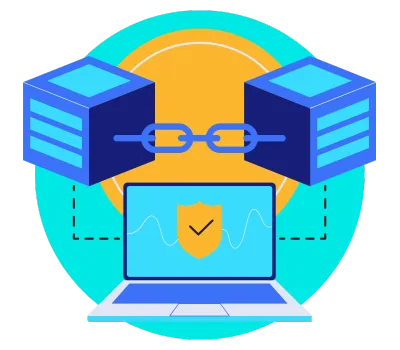
Blockchain and Web3 are revolutionizing the digital world by providing secure, transparent, and decentralized solutions. Unlike traditional systems dependent on intermediaries, blockchain records every transaction on an immutable ledger, ensuring trust and preventing tampering—perfect for industries where data integrity and security are essential.
Web3, the next evolution of the internet, shifts control back to individuals by decentralizing data, identity, and digital assets. Through decentralized applications (dApps) and smart contracts, businesses can automate processes, cut costs, and remove inefficiencies tied to third-party platforms.
For enterprises, these innovations create opportunities in digital asset management, tokenized economies, supply chain tracking, and secure peer-to-peer transactions. Beyond operational efficiency, blockchain and Web3 foster greater transparency and accountability, strengthening trust with stakeholders. Together, they lay the foundation for a digital ecosystem that is efficient, equitable, scalable, and resilient—unlocking a future where users and businesses thrive in a fairer, more open digital economy.
The Process of Launching Blockchain & Web3 Services
- Requirement Gathering & Pre-Launch Planning
Identifying goals, regulatory requirements, and technical scope is the foundation of a successful blockchain project.
- System Architecture & Development
Building secure backend infrastructure along with user-friendly frontends, tailored to the specific Web3 solution.
- Integration of Decentralized Networks
Connecting multiple blockchains, wallets, and smart contract functionalities into the core system for seamless operations.
- Security Enhancement & Risk Assessment
Conducting penetration tests and vulnerability assessments to ensure maximum protection against threats.
- Feature Implementation & Testing
Deploying core functionalities such as token issuance, digital identity, or decentralized marketplaces, followed by User Acceptance Testing (UAT).
- Deployment & Handover
Launching the platform in a live environment with continuous support and monitoring.

Blockchain & Web3 Development Services

Choosing the Right Platform
A robust blockchain service must support high transaction throughput, minimal downtime, and efficient scalability.

Transparency & Trust
Blockchain services must integrate real-time auditing and immutable ledgers to ensure complete transparency in operations.

Regulatory Compliance
KYC, AML, and GDPR compliance are crucial in decentralized ecosystems to maintain trust and avoid legal challenges.

Data Security & Privacy
Web3 platforms must safeguard sensitive data with encryption, multi-factor authentication, and fraud detection mechanisms.

Ready-to-Launch Solutions
Service providers often offer pre-built blockchain solutions, customizable for branding, integration, and scalability.

Integration & Interoperability
Solutions must easily connect with existing enterprise systems, APIs, and decentralized applications (dApps).

Customizable Design
A flexible and responsive interface ensures adaptability across devices while maintaining a seamless user experience.

Advanced Features
Features like smart contract automation, fraud detection, risk management, and advanced analytics enable secure and efficient operations.

Data & Analytics Delivery
Real-time and historical blockchain data can be used for monitoring, compliance, and business intelligence.

Modular Development
Designed first, built by an accountable team, run after go-live.
Architecture before code
Chain selection, custody model, compliance obligations and the security boundary are decided in the Solution Architecture phase, before any smart contract is written.
Exchange-grade engineering
Senior backend, smart-contract and security engineers under a Webist PM and SA, with QA covering both application and contract behaviour.
Operated and monitored
Wallet infrastructure, nodes and integrations are run with 24/7 monitoring, key-management procedures and incident response defined up front.
What you get beyond the deliverable.
- Security reviews and independent audits scheduled into the roadmap, not added after launch.
- Regulatory context mapped early, including the Securities Commission Malaysia's digital asset framework where it applies.
- High-concurrency engineering experience from consumer platforms applied to matching engines, wallets and settlement.
- Your in-house team trained to operate the platform after go-live.
Common questions about blockchain & web3 — secure, transparent, decentralized.
01Which blockchains and standards do you work with?
EVM-compatible networks, major public chains and permissioned ledgers, selected in the design phase against your custody, throughput and compliance requirements rather than by preference.
02How do you handle security for wallets and smart contracts?
Threat modelling in the Solution Architecture phase, secure key management, code review by a second engineer, and independent audits before mainnet deployment. Incident response procedures are agreed before launch.
03Can you help with licensing and regulatory questions?
We map the obligations that apply to your model, such as the Securities Commission Malaysia's requirements for digital asset exchanges, and design the platform to satisfy them. Legal advice itself comes from your counsel, and we work alongside them.
Start with a free 30-minute discovery call.
Tell us where you are. You get an estimated quotation within 48 hours, a clear plan, and a working team in eight weeks.